If you are working a minimum wage job, statistically speaking, you give away a larger percentage of your income to charity than a billionaire does. This is a profound paradox because our innate sense of justice makes us want to believe that the world is fair: if you have more, you give more, and if you do wrong, the justice system will hold you accountable, irrespective of status or wealth. But unfortunately, that isn’t how it works. Instead, extreme wealth seems to rewire human empathy, as seen when we start with ancient biblical metaphors alongside modern socioeconomic data and tie it all together with the huge investigative journalism leaks of the past decade. Whether you’re trying to figure out your own charitable giving, or feel exhausted by the daily news cycle of billionaires acting with total impunity, this discussion provides a framework to understand what’s happening.
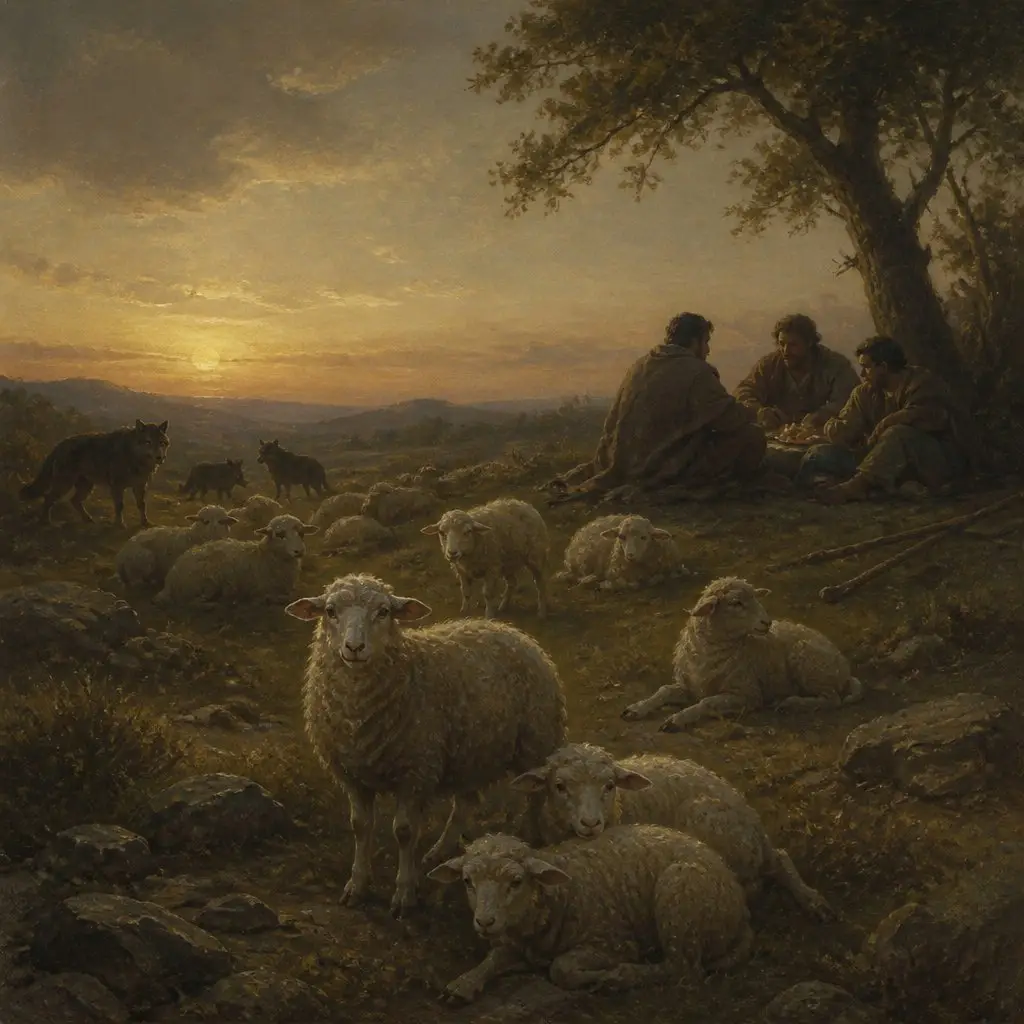
The Hebrew prophets of the Old Testament, specifically Jeremiah and Ezekiel write depressingly of millennia of false worship, systemic injustice, and societal collapse that leave Jeremiah and Ezekiel feeling stuck and powerless: Yahweh had already passed judgement, and so they can’t fix the broken system or negotiate a peace for the people. Looking at the mechanism of societal collapse, a core metaphor arises. Ezekiel sees Yahweh judging a flock and dividing it into two groups in a vision: the fat and thin sheep. The text describes the fat sheep grazing greedily on the best pasture, getting full, and instead of leaving the rest of the grass for the thin sheep, they trample it, spoiling the pasture and muddying the drinking water. First they are greedy, then they destroy others’ opportunities just for power’s sake. This ancient text perfectly captures the contemporary reality of how the powerful and wealthy treat those with less social and economic leverage. It seems this oppression is a timeless tale.
In a vital secondary element to the vision: the shepherds, who saw gross injustice, took no responsibility. Their task was to uphold justice, but because challenging the fat sheep was dangerous and unprofitable, an ancient dynamic plays out: the powerful steal and destroy, while leaders turn a blind eye. The weak become prey (Ezekial 34:8).
The next question to ask was whether this metaphor was only for that era, or if wealth also makes human beings less generous today? At the opposite end of the scale, does poverty automatically produce virtue? Statistical data reveals a stark reality: the poor, on average, are far more generous than the rich.
Hard Data
Data from Pro Bono Economics and the Institute of Family Studies shows that the top 1% of earners donate a minuscule 0.15% to 0.2% of their income to charity, and the top 20% give roughly 0.7%. In contrast, the bottom 20% donate 3.2% of their gross monthly income, over 4 times as much as those in the top 20%. This trend holds globally. According to the Charities Aid Foundation (CAF), populations in the poorest countries give an average of 1.45% of their monthly income, whereas the wealthiest countries match the low figures of top earners. These figures exclude informal giving, but data also show that low-income individuals are more likely to engage in unrecorded acts of generosity, for example, buying groceries or covering utility bills for neighbors in need. The figure below is from CAF Kenya:

Pushing back on the narrative a bit, other data from a UK-based group on volunteering across the income spectrum, the National Council of voluntary organizations (NVCO) data – show middle/upper classes contributing time more than money: 79% of wealthy Britons volunteered their time in the previous year, with 44% doing so regularly. In the working-class group, only 30% volunteer. So do the British middle or upper classes have a different currency of generosity, with wealth affording them the free time that the working class just do not have? Generosity looks different across socioeconomic lines, with distinct forms of contribution based on unique constraints. While the affluent may volunteer time, the working class, facing severe time constraints from multiple jobs and domestic burdens—offer financial contributions more often. These monetary gifts are a significant portion of income needed for baseline survival, and so make these sacrifices arguably more profound than the time volunteered by the middle/upper classes.
The Insulated Rich
Extreme wealth doesn’t just buy comfort; it buys a fortress against accountability. The 2017 Paradise Papers leak exposed this though the roughly 13.4 million leaked records: Süddeutsche Zeitung got hold of these and shared them with the International Consortium of Investigative Journalists- more than 380 journalists in 67 countries.
The leaks showed how elite law firms and corporate service providers like Apple, Estera, and Asiaciti Trust, craft legal labyrinths across offshore tax havens to shield the fortunes of world leaders, royalty, and corporate giants—including Queen Elizabeth II, then-Prince Charles, Wilbur Ross, Nike, and Uber.
When public outrage mounted over Apple’s Irish tax arrangements, leaked files revealed advisers effortlessly pivoting to reconfigure structures behind closed doors, settling on Jersey as a new haven. Paired with the revelations of the Epstein files, which detailed the trafficking of over 1000 minors, none of whom have seen redress for their suffering, a glaring double standard emerges: while ordinary people face the raw, unyielding edge of the law, the rich get off scot-free; the unjustly accumulated wealth that gets them in trouble with the law also gives them the resources to protect themselves from the law. Money, after all, is power. Bob Dylan’s cynical lyrics couldn’t be more apt: ‘Steal a little and they throw you in jail, steal a lot and they make you a king’.
What does this all mean? Ancient prophets watched their society fail, helpless to avert divine justice. In today’s world, the bottom 20% of earners give away 3.2% of their income while the top 1% give a fraction of a percent; 13.4 million leaked documents reveal the architecture of offshore tax evasion; and out there in single brick rooms, real generosity takes place, profound and unnoticed. Can we synthesize all of this?
Subjective Wealth Empathy and its Opposite
Subjective wealth empathy describes the empathy formed by experiencing financial hardship.
Subjective wealth empathy is born from proximity: the poorest members of society share generously because they intimately understand struggle. I saw this firsthand in Addis Ababa while volunteering at a mission clinic. A 14-year-old girl invited me to an Easter meal in the single-room brick home she shared with other children on the edge of poverty. The chicken she served was likely the only chicken meal she would cook that year. Yet the children invited me to eat first, watching until I finished before touching the food themselves. They repeated the same pattern with the coffee. That experience changed my understanding of hospitality. In affluent cultures, charity often means giving giving from what’s left over and won’t be missed. In that room, generosity meant giving from the core. The children knew hunger intimately, yet their instinct was to make a guest feel abundance. It was the opposite of fat sheep trampling the pasture: one small patch of good grass, freely shared, despite the personal cost.
If a 14-year-old girl who knows hunger teaches us the core of hospitality, and suffering financial hardship creates empathy, what does insulated abundance create? Does it short-circuit the psychological ability of the super-rich to feel empathy; to lose connection to humanity? Hyper-individualism in Western democracies perpetuates the idea that we live in a meritocracy where ‘we all have the same 24 hours in a day’. The poor are just “lazy” and need to ‘pull themselves up by their bootstraps’. Western individualism provides the convenient excuse that everyone is solely responsible for themselves – the wealthy deserve their wealth because they earned it, as the poor did their poverty. Crucially, we are also told that everyone’s suffering is a personal, not societal, responsibility. Even if an individual has a personal fortune equivalent to the GDP of a small country, they don’t have a moral responsibility to use that obscene wealth to help anyone but themselves, despite the greater power to help that their wealth and influence affords them. Spiderman would not approve.
Another particularly callous idea is economic ‘survival of the fittest’ – that poverty, with the suffering and premature death that it leads to, is inevitable, and is the morally neutral outcome of the weak falling to the bottom of the free-market food chain. These narratives let the rich stay in a bubble of excess, unimpeded by guilty thoughts, societal responsibility or, God forbid, empathy; framing them as deserving of their fortune, and poverty as the morally deserved consequence of laziness. A willful choosing to believe narratives that cause empathy to atrophy, justify gross indulgence and obscene wealth, and suppress fledgling ideas that might confront character or responsibility, leads the elite to a callous distance from the struggles of others.
If Ezekial were alive today, he would observe modern “fat sheep” deeply insulated by wealth, and so far removed from the daily realities of the pasture that they no longer recognize the grass they trample as something others rely on to survive. If the walls are high enough, those inside never have to see the people being crushed on the other side.
Rightly responding to such blatant injustices is a moral and ethical responsibility: we must notice who holds the scales and courageously question the information presented to us.
https://www.bible.com/bible/116/EZK.34.4.N